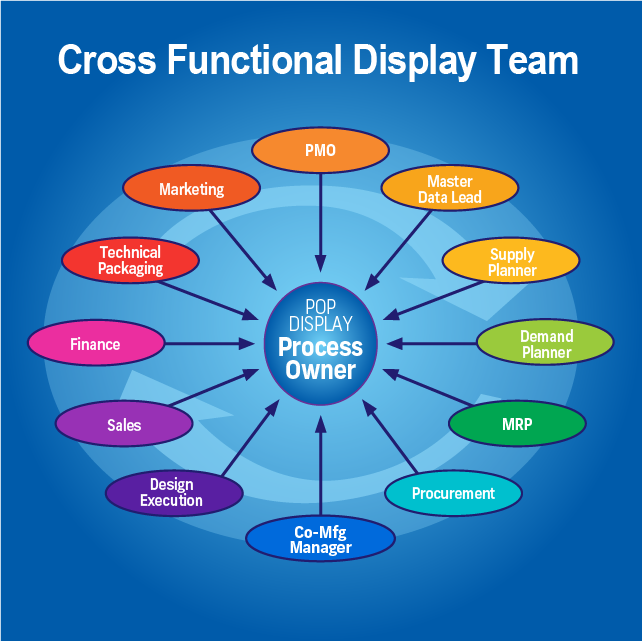
Behind the Display: Cross-Functional Roles that Drive Success
POP (Point-of-Purchase) displays might look simple, once you see them at retail — but the reality is, displays are product of a complex, highly coordinated process. Without the right team, programs risk becoming unprofitable, delayed, or misaligned with customer needs.
🔑 The key to efficient display development and management lies in assigning a clear single point of contact within each function.
There are at least 12 distinct roles requiring subject matter experts to provide both accountability and expertise, to ensure that every program is set up for success.
✨ Leadership & Strategy ------------------------------
1) Project Leader / Process Owner Acts as single point of contact - the bridge between the CPG organization, suppliers, and creative agencies. This person is the steward of all display programs — past, present, and future — helping Marketing and Sales conceptualize programs and approving structures from a customer-facing perspective.
2) Sales Lead Serves as the voice of the customer. This person sources display opportunities directly from account managers, ensuring every program aligns with business objectives and responds to shopper and retailer trends.
3) Marketing Lead Keeps all programs aligned to brand and marketing strategy. Ideally, this is a Shopper Marketing Manager who ensures displays are not only effective in-store but also consistent with campaign messaging and graphics.
4) Finance Lead Runs the numbers, from initial to final P&Ls. This role ensures programs are financially viable and support the company’s profit objectives.
⚙️ Technical & Execution ------------------------------
5) Technical Packaging Lead Ensures displays are structurally sound, compliant with sustainability goals, and practical to execute. This person enters final specifications into the management platform (e.g., SAP) and acts as the engineering checkpoint for all packaging solutions.
6) Design ExecutionOwns the development and release of display graphics. As the primary contact for creative agencies, they ensure artwork is delivered on time and aligns with brand standards. In cases where resources are limited, this role can be absorbed by the Process Owner.
7) PMO / Project ManagerManages timelines, tracks deliverables, and ensures all stakeholders are updated when plans change. The PMO keeps the process moving and transparent.
8) Procurement Negotiates material pricing and contracts, tracks cost savings, and ensures supply agreements support overall program goals.
🚚 Supply Chain & Planning ---------------------------
9) Supply Planner Oversees the production schedule, issues POs for material and assembly, and manages co-packer capacity. Plays a key role in minimizing remnant packaging.
11) Demand Planner Maintains accurate forecasts for display programs. By staying in close contact with account managers, they ensure supply planning is based on the latest business outlook.
10) Master Data Lead Handles SKU setup and activation, including One World Sync (1WS). Without accurate master data, programs can quickly stall.
12) Material Requirement Planner (MRP)Manages packaging inventories, orders materials, and optimizes EOQs (economic order quantities). This role minimizes waste while ensuring supply continuity. (Note: not required when working with a turnkey supplier).
13) Co-Manufacturing Manager Owns the relationship with the co-packer, ensures service quality, and approves new co-manufacturing partners.
🏭 External Partners -----------------------------------
A) Display Manufacturer – Provides structural design and production.
B) Co-Packer/EPL – Executes final assembly of product into displays. (Optional when using a turnkey supplier.)
C) Creative Agency – Delivers artwork and design support. This service can be fulfilled by internal design teams, external creative, marketing agencies or the display supplier’s graphic design team.
✅ Why This Matters -----------------------------------
When accountability is unclear, bottlenecks emerge — forecasts slip, procurement scrambles, and timelines derail.
When each function has a clear owner, displays move from concept to retail execution with fewer delays, less waste, and stronger alignment to business goals.
In my next article, I will discuss how these functions contribute to the display development process.
#POPDisplays #RetailDisplays #InStoreMarketing #ShopperMarketing #RetailExecution
🔗💼 If smoother, faster, and less risky POP display programs sound like a win for your team, let's connect. I specialize in bridging gaps between brands and suppliers to optimize display development, execution, and management.